Quick Answer: A dental bridge is a fixed row of artificial teeth that fills the gap left by one or more missing teeth. Crowns on the healthy teeth beside the gap anchor the replacement tooth in place. A bridge is often faster and less invasive than an implant. However, an implant does not rely on the neighbouring teeth, so the better choice depends on your teeth, gums, bone and budget.
A missing tooth changes more than your smile. It changes how you chew, how your bite meets and, over time, where your other teeth sit. For many patients, a dental bridge in London, ON is the simplest fixed way to close that gap. At West Five Family Dental on Riverbend Road, we often hear the same three questions about bridge dental treatment: what exactly it is, how it works and whether an implant would be better. This guide answers all three plainly.
What Is a Dental Bridge?
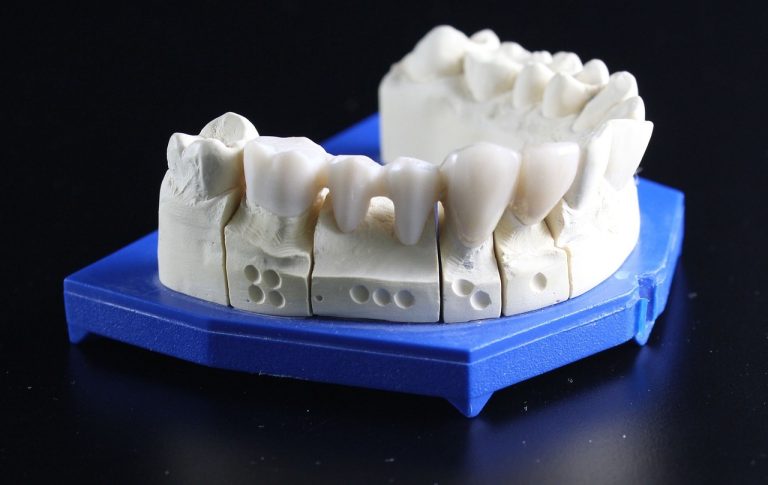
A dental bridge is a custom-made prosthesis that literally bridges the space where a tooth used to be. It stays cemented in your mouth, so you never take it out at night.
Most bridges have two parts. The pontic is the artificial tooth that sits in the gap. The abutments are the supports on either side, usually crowns placed over your natural teeth. According to the Canadian Dental Association, a bridge replaces one or more missing teeth and is anchored to the natural teeth or roots nearby. Additionally, the pontic is shaped and shaded to blend in with the rest of your smile.
Common types of bridges
Not every gap calls for the same design. Your dentist will choose based on where the tooth is missing and how healthy the surrounding teeth are.
- Traditional (fixed-fixed) bridge: crowns on both neighbouring teeth hold the pontic between them. This is the most common design.
- Cantilever bridge: the pontic attaches to a support on one side only. It can suit certain front-tooth gaps.
- Resin-bonded bridge: small metal or ceramic wings bond to the back of the neighbouring teeth. Consequently, much less tooth structure needs to be removed.
Resin-bonded designs have a solid research base. Specifically, a systematic review in the British Dental Journal evaluated the survival rate of resin-bonded bridges and the factors that affect how long they last.
How Bridge Dental Treatment Replaces a Missing Tooth
A bridge restores the gap by spreading chewing forces across the supporting teeth. As a result, you can bite normally again, and nearby teeth have less room to tip or drift into the empty space.
Here is what the process usually looks like at our London office.
Visit one: assessment and preparation
First, we examine your teeth and gums and take digital X-rays. These images show whether the supporting teeth have healthy roots and enough bone around them. If they do, we gently reshape those teeth so the crowns can fit over them. Then we take precise impressions and place a temporary bridge to protect your teeth.
Visit two: fitting the final bridge
Meanwhile, a dental laboratory crafts your permanent bridge. When it arrives, we check the fit, the colour and your bite. After any small adjustments, we cement it in place. Most patients leave with a bite that feels natural within a few days.
Feeling nervous about the appointment? That is common. West Five Family Dental offers nitrous oxide, oral sedation and IV sedation for patients who want a calmer visit.
Who Is a Good Candidate for a Dental Bridge?
You may be a strong candidate if the teeth on either side of the gap are healthy and your gums are in good shape. Bridges also work well when the neighbouring teeth already have large fillings or crowns. In that case, crowning them adds protection rather than taking healthy enamel away.
On the other hand, a bridge may not suit you if the supporting teeth are weak, loose or affected by advanced gum disease. Gum problems need treatment first. Our team often recommends scaling and root planing before restorative work so the foundation stays stable. The Ontario Dental Association also notes that gum disease is a leading cause of tooth loss in adults, so healthy gums protect your bridge and your remaining teeth.
Dental Bridge or Dental Implant: Which Is Better?
Neither option is better for everyone. A bridge is usually quicker and avoids surgery, while an implant preserves the neighbouring teeth and replaces the root as well as the crown.
Because West Five Family Dental offers both, we can compare them honestly for your mouth. Here is how they differ in practice.
When a bridge often makes more sense
A bridge is a good fit when you want a fixed result in a few weeks rather than several months. It also suits patients who prefer to avoid surgery or who have medical reasons to skip it. Furthermore, if the nearby teeth already need crowns, a bridge solves two problems at once.
When an implant often makes more sense
An implant stands on its own, so your healthy neighbouring teeth stay untouched. It also stimulates the jawbone, which helps limit bone loss in the gap. Implants have a strong track record. For example, a review in Periodontology 2000 reports high 5-year survival rates for implant-supported prostheses, including 97.1% for fixed implant restorations. However, implants need enough healthy bone, and some patients require bone grafting first.
In short, the right answer depends on your bone, gum health, timeline and budget. A consultation is the only way to know for certain.
Caring for Your Dental Bridge in London, ON
Good daily care is what keeps a bridge working for many years. Brush twice a day and clean under the pontic every day, because plaque can collect there. A floss threader, a water flosser or small interdental brushes make this much easier.
Also, keep up with regular checkups and professional cleanings. Your hygienist can reach areas around the bridge that are hard to clean at home. If you grind your teeth at night, ask about a night guard to protect the porcelain. Finally, avoid chewing ice or hard candy with the bridge.
Paying for Your Bridge
Costs vary with the number of teeth involved and the materials used. Many private insurance plans cover part of the cost of a bridge. In addition, West Five Family Dental accepts the Canadian Dental Care Plan (CDCP), which can help eligible patients access restorative care. Our front desk team can review your coverage before treatment begins.
Frequently Asked Questions
How long does a dental bridge last?
With good oral hygiene and regular checkups, many bridges last well over a decade. The health of the supporting teeth and gums has the biggest effect on lifespan.
Does getting a bridge hurt?
We numb the area before preparing the teeth, so most patients feel pressure rather than pain. Some mild sensitivity can follow for a few days. Sedation options are available if you feel anxious.
Can a bridge replace more than one tooth?
Yes. A bridge can replace two or more teeth in a row, provided the supporting teeth are strong enough to carry the extra load.
Is a bridge cheaper than an implant?
The upfront cost of a bridge is often lower than an implant. However, total cost depends on your case, so we provide a clear estimate after your exam.
Book a Bridge Consultation in London
If a missing tooth is affecting how you eat or smile, we can help you weigh a bridge against an implant with real X-rays and honest advice. Learn more about our crowns and bridges, or contact West Five Family Dental at 1295 Riverbend Road to book your visit. We welcome new patients, walk-ins and dental emergencies.
Sources & References
- Canadian Dental Association: Bridges
- Ontario Dental Association: Tooth Loss
- Predictability of resin bonded bridges: a systematic review (Br Dent J, 2017)
- Prosthetic failures in dental implant therapy (Periodontol 2000, 2022)